
Taba is a small yet historically significant Egyptian town located in South Sinai Governorate along the Gulf of Aqaba, forming the northernmost resort of Egypt’s Red Sea Riviera. It lies at the crossroads of four countries — Egypt, Israel, Jordan, and Saudi Arabia — and serves as a major gateway for tourism, culture, and cross‑border interaction in the region.
Despite its relatively modest size and population, Taba’s strategic geographic location and natural beauty have made it a unique destination for travelers seeking tranquility, outdoor adventure, and access to some of Egypt’s richest marine and desert landscapes.
Geography and Location
Taba is situated at the head of the Gulf of Aqaba in the extreme northeastern part of the Sinai Peninsula. It is bordered by the mountainous wilderness of Sinai to the west and the sapphire waters of the Red Sea to the east. Taba lies approximately 240 km north of Sharm el‑Sheikh and about 7 km west of the Israeli resort city of Eilat.
The town’s coastal strip features picturesque bays, coves, and coral‑rich waters, making it part of one of the most scenic locations on the Red Sea coast. Its mountains, plateaus, and valleys also provide dramatic backdrops and ideal terrain for hiking, exploration, and ecological excursions.
Taba’s position at the convergence of multiple borders has not only defined its role in modern geopolitics but also contributed to a blending of cultures, trade, and tourism dynamics unique to such a nexus point between North Africa and the Middle East.
Historical Overview
Early and Colonial Period
The early history of Taba is intertwined with that of the Sinai Peninsula’s shifting administrative and political status. During the Ottoman era, Sinai was nominally part of the Ottoman Empire but was administered largely by Egypt. This created ongoing tensions over territorial boundaries, particularly between Egypt and the Ottoman administrative centers in the Levant.
In 1906, Taba was at the center of a border dispute between Egypt (then under British influence) and the Ottoman Empire. The conflict culminated in negotiations and a formal demarcation of the border from Rafah to the Gulf of Aqaba, setting the stage for modern international boundaries in the region.
20th‑Century Conflicts and Peace Settlements
Following the Tripartite Aggression of 1956, in which Egypt was invaded by Britain, France, and Israel, Taba was briefly occupied by Israeli forces. Although Israel withdrew in 1957, it later re‑occupied the area after the Six‑Day War in 1967. During this period, significant infrastructure — including large hotels — was built by the occupying administration.
The Egypt‑Israel Peace Treaty of 1979 led to further negotiations over the exact location of the international border near Taba. Both nations agreed that historical maps showed Taba as Egyptian territory. After arbitration in 1988–1989, Taba was formally returned to Egyptian sovereignty, and on 19 March 1989, the Egyptian flag was raised again over the town.
On 24 September 1995, the Taba Agreement was signed in the town between the Palestine Liberation Organization and the Israeli government, marking another moment of regional diplomatic significance.
Modern Events
Taba has also witnessed tragic events in its recent history. On 7 October 2004, the Hilton Taba Hotel was targeted in a bombing that killed 34 people and injured many more. Later, on 16 February 2014, a tourist bus waiting to cross into Israel was struck by a suicide bombing that killed four people and injured others. These incidents underscored regional security challenges affecting Sinai in the early 21st century.
Demographics and Culture
Though Taba itself is small — covering roughly one square kilometer — its population is diverse and shaped by regional flows of tourists, workers, and international visitors.
The local culture draws heavily from Bedouin traditions and Sinai heritage, reflected in artisan crafts such as handmade carpets, textiles, and jewelry often sold in local markets. Bedouin hospitality and storytelling continue to be an important part of the social fabric, with visitors often engaging with local hosts to learn about their history, customs, and way of life.
Arabic is the dominant language, and Islam is the predominant religion, although the tourism sector brings linguistic and cultural diversity to the area, especially during peak seasons.
Economy and Infrastructure
Tourism Sector
Tourism is the backbone of Taba’s economy. The town’s coastal location, mountain landscapes, and proximity to historical and natural attractions have fostered investment in hotels, resorts, and recreational facilities. Rambunctious nightlife gives way to tranquil beaches and coral reef exploration, making the destination especially attractive for diving, snorkeling, and relaxed seaside holidays.
Taba is often described as offering a more peaceful alternative to the more commercialized Red Sea destinations like Sharm el‑Sheikh, appealing especially to those who prefer less crowded beaches and slower‑paced vacations.
Transport and Connectivity
Connectivity to Taba is facilitated by several transportation modes:
-
Taba International Airport serves charter flights from Europe and other regions, enhancing global access.
-
The Taba Border Crossing remains one of the busiest international checkpoints between Egypt and Israel, enabling visa‑free entry for certain travelers and supporting tourism flows between the two countries.
-
Taba is also connected by road to other major Sinai destinations such as Nuweiba, Dahab, and Sharm el‑Sheikh.
Development Projects
Government and private sector investments have focused on improving infrastructure, including roads, utilities, sanitation, communications networks, and tourism facilities. Expansion of the port, marina, and aviation services is part of long‑term plans to enhance Taba’s role as both a leisure destination and a commercial hub on the Gulf of Aqaba.
Natural Environment and Attractions
Red Sea Coast and Marine Life
The Gulf of Aqaba’s clear, warm waters host vibrant coral reefs and abundant marine biodiversity, making Taba a top choice for diving and snorkeling enthusiasts. Reefs near the town’s shoreline offer rich underwater scenery with colorful fish, corals, and other sea creatures that reward both beginners and experienced divers.
Mountains and Desert Landscapes
Surrounding Taba is a rugged wilderness of desert mountains, valleys (wadis), and plateaus offering dramatic scenery and excellent opportunities for hiking, photography, and exploration. Natural formations in the region date back thousands of years and include striking canyons and rock formations with layers of distinct colors and geological features.
Taba Protected Area
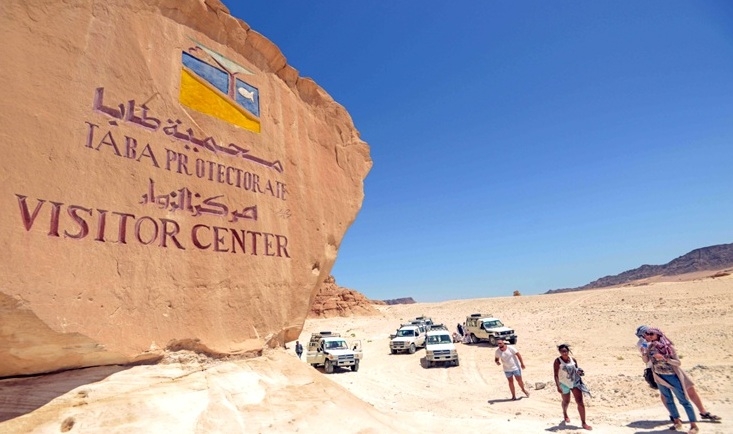
To the southwest of the town lies the Taba Protected Area, covering a huge swath of land and designated to conserve unique desert ecosystems, wildlife, and geological formations. This natural reserve is home to diverse plant species, birds, reptiles, and iconic mammals such as the Nubian ibex, and provides a sanctuary for ecological research and outdoor adventure.
Fjord Bay and Other Scenic Spots
Further along the coast, Fjord Bay has become a celebrated natural destination for swimming, diving, and relaxation. Surrounded by steep mountains and deep blue waters, it is often described as one of Sinai’s most tranquil natural harbors. Other sites like the Colored Canyon provide standalone hiking experiences famed for vividly hued rock walls and narrow passageways carved by nature over millennia.
Cultural and Recreational Activities
Bedouin Heritage Experiences
For visitors eager to immerse themselves in local culture, interactions with Bedouin communities offer insights into traditional ways of life. Activities can include guided walks, participation in traditional meals, and storytelling sessions that trace the history of the Sinai and its tribes.
Diving and Water Sports
Taba’s location on the Red Sea makes it an excellent hub for water sports. Diving and snorkeling sites range from shallow reefs to deeper drop‑offs, with many centers offering certification courses, gear rental, and guided excursions.
Adventure Tourism
Beyond the water, desert safaris, jeep tours, camel treks, and sunrise or sunset hikes are popular choices for visitors wanting to discover the rugged beauty of Sinai’s backcountry.
Societal Impact and Global Connections
Taba’s international border crossing with Israel not only facilitates tourism but also economic exchange and regional mobility. Prior to geopolitical tensions in the Middle East, Israeli tourism accounted for a significant portion of visitors to Taba’s resorts, beaches, and attractions.
The town’s international airport and growing event calendar also attract visitors from Europe and beyond, further integrating Taba into global tourism circuits.
Challenges and Development Prospects
Like many coastal destinations, Taba faces pressures related to sustainable development and environmental conservation. Balancing tourism growth with protection of marine and desert ecosystems remains an ongoing priority for local and national authorities. Ensuring that infrastructure expansion does not harm natural habitats or traditional livelihoods is key to preserving Taba’s long‑term appeal.
Continued investment in transport, hospitality, and eco‑tourism — along with marketing that highlights Taba’s unique combination of scenic beauty, relaxed atmosphere, and cross‑cultural access — offers promising prospects for future growth while retaining its distinctive identity within Egypt’s Red Sea Riviera.
Conclusion
Taba epitomizes a unique blend of natural splendor, historical significance, cross‑border connection, and laid‑back coastal charm. From its mountains and deserts to its vibrant reefs and tranquil bays, it offers a diverse travel experience that appeals to historians, adventure seekers, and relaxation‑oriented tourists alike. Its strategic location, evolving infrastructure, and ongoing development plans position it as both an important gateway to Sinai and a destination with untapped potential in Egypt’s tourism landscape.
Whether you’re drawn by immersion in Bedouin culture, exploration of underwater worlds, or simply enjoying spectacular Red Sea sunsets, Taba stands out as a destination of both scenic wonder and historic resonance.